When Is a Stainless Steel Crown Required Instead of a Composite Filling for Baby Molars?
A stainless steel crown is usually recommended over a composite filling when a baby molar has extensive decay, decay between the teeth, a pulp treatment, weak enamel, or a high risk of new cavities. A composite filling works well for small, contained cavities. At Sweet Street Pediatric Dentistry, Dr. Kristan Ingraham-McQueen examines each tooth closely and explains which option will protect it until it falls out naturally.
Dr. Ingraham-McQueen is certified by the American Board of Pediatric Dentistry and has more than 10 years of experience. Families seeking pediatric dentistry in Parrish, FL can call (941) 229-8287 to schedule an exam if they have questions about a cavity in a baby molar.
Why Baby Molars Need Careful Treatment Decisions
Baby molars stay in the mouth longer than many parents expect. The back molars often remain until a child is 10 to 12 years old. That means a filling or crown has to hold up through years of chewing, brushing, and snacking.
These teeth also hold space for the permanent teeth below them. If a baby molar breaks down or is lost early, nearby teeth can drift and crowd the space. Choosing the right repair helps keep the bite on track.
Baby Molar Enamel Is Thinner
Primary teeth have thinner enamel than adult teeth, and the nerve sits closer to the surface. Decay can spread quickly from the outer layer to the pulp. This is why a cavity that looks small on the surface may be larger underneath.
What a Composite Filling Does Well
A composite filling is a tooth-colored resin that bonds to the tooth. It removes only the decayed area and keeps more of the natural tooth structure. It also blends in with the rest of the smile. Learn more about pediatric dental fillings if your child has a small cavity. Composite fillings are a good fit in certain situations:
- The cavity is small and limited to one surface of the tooth.
- Enough healthy tooth structure remains to support the filling.
- The child can stay still and keep the area dry during placement.
- The child has a low risk of new cavities.
When these conditions are met, a filling is often the simplest and most conservative choice.
When a Stainless Steel Crown Is Required for Baby Molars
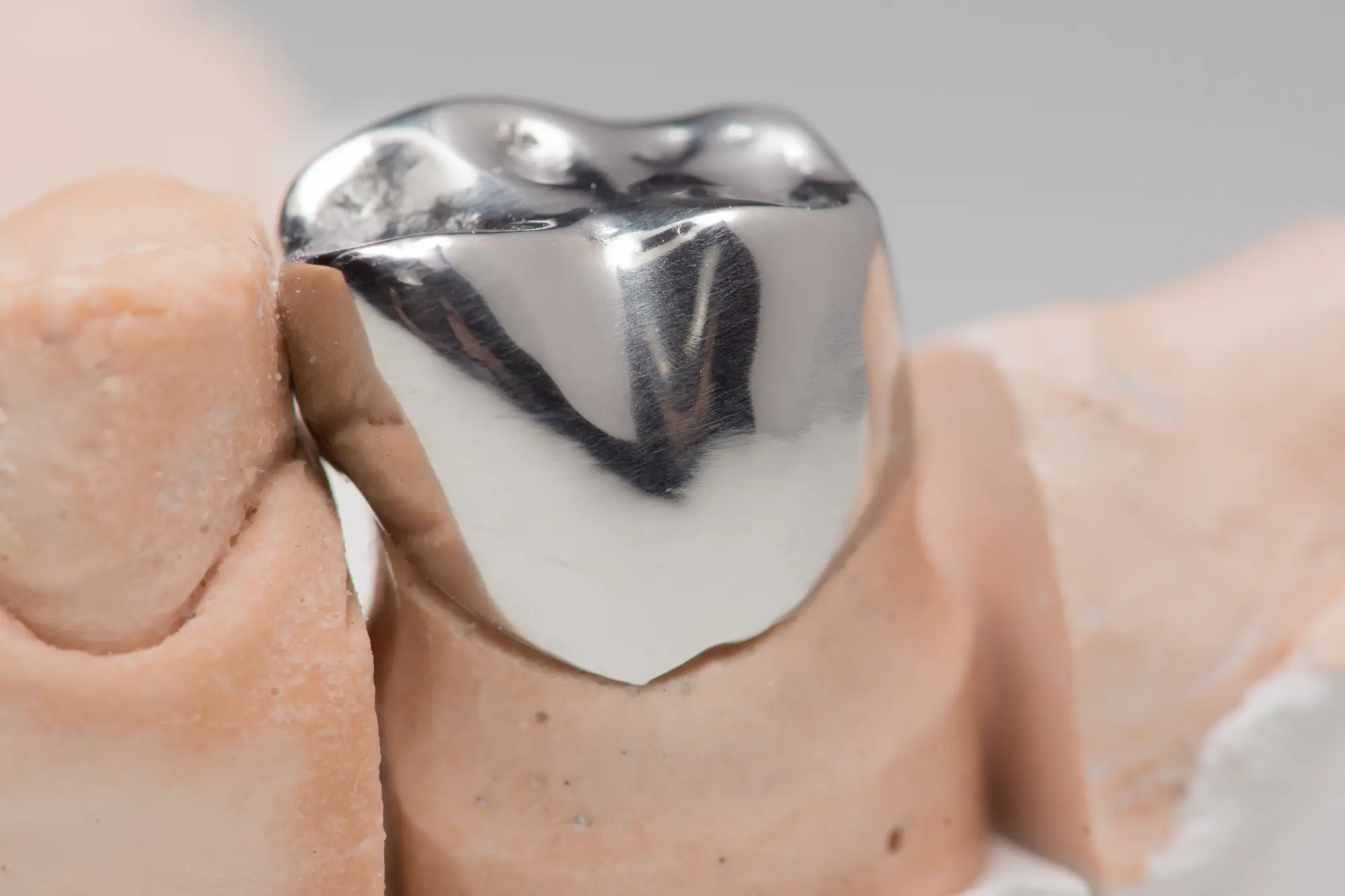
A stainless steel crown covers the entire tooth like a cap. It is prefabricated, fitted to the tooth, and cemented in place. Because it wraps around the tooth, it protects every surface at once. Dr. Ingraham-McQueen may recommend a custom stainless steel crown in these cases:
- Decay covers two or more surfaces of the molar.
- The cavity extends deep toward the nerve.
- The tooth needs a pulpotomy, sometimes called a baby root canal.
- Enamel is weak because of a developmental condition such as molar hypomineralization.
- The tooth has fractured or a previous filling has failed.
- The child has frequent cavities and a high decay risk.
In these situations, a filling may not stay in place. Large fillings in thin primary teeth tend to chip, leak, or break away, which allows decay to return under the repair.
Crowns After Nerve Treatment
A baby molar that has had a pulpotomy becomes more brittle. A crown holds the tooth together more effectively and seals it from bacteria. Research and clinical experience show crowns last longer than fillings in this setting.
How Stainless Steel Crowns Compare With Composite Fillings in Durability
For multi-surface cavities in baby molars, stainless steel crowns generally outlast fillings. Many stay in place until the tooth naturally falls out. A large composite filling in the same tooth has a higher chance of needing a second visit.
This matters for children who are anxious or have special needs. Repeating treatment means more appointments, more numbing, and more stress. Choosing a durable repair the first time can spare a child that experience.
Crowns also protect against recurrent decay more effectively because there are fewer seams where bacteria can enter. For a child who struggles with brushing or snacks often, that added protection is useful.
What to Expect During a Crown Visit
Dr. Ingraham-McQueen explains each step in simple language before beginning. The tooth is numbed, the decay is removed, and the tooth is shaped slightly so the crown fits well. The crown is then cemented over the tooth.
Most children are surprised by how quickly the process goes. Our office has TVs in every room, which gives children something to watch during treatment. Afterward, they can visit the custom prize station, and many parents say their children now look forward to coming in for dental visits at our office.
Comfort and Sedation Options
Some children need extra support to feel safe in the chair. Sweet Street Pediatric Dentistry offers laughing gas for mild to moderate anxiety. IV sedation is also available, and it is provided and monitored by a board-certified medical anesthesiologist. This can help young children or children with special needs complete treatment comfortably. Families can read about pediatric sedation options before the visit.
Caring for a Crowned Baby Molar at Home
A crowned tooth still needs daily care. Decay can start at the gumline around the crown, and gum inflammation can develop if plaque builds up. Brushing twice a day with fluoride toothpaste and flossing where teeth touch keeps the area healthy.
For the first day, your child may have mild gum soreness. Soft foods help while the gums settle. Sticky candy and hard foods are best limited, since they can loosen a crown.
A crown usually comes out on its own along with the baby tooth when the permanent tooth pushes through. If a crown becomes loose or falls out early, call the office so the tooth can be checked and the crown replaced.
Preventing the Next Cavity in Your Child's Baby Teeth
Treating a cavity is only part of the plan. Prevention keeps other baby molars from needing the same care. Regular exams catch early decay while a small filling is still enough, and fluoride treatments strengthen enamel.
Dental sealants on the chewing surfaces can also help. Limiting juice, sports drinks, and frequent snacking gives enamel time to recover between meals.
Families without dental insurance can ask about the 12-month Membership Plan. It includes two cleanings, two fluoride treatments, x-rays, exams, and 20% off emergency visits. The team can also help families check insurance acceptance by phone.
Ask Sweet Street Pediatric Dentistry About Your Child's Baby Molar
The best choice depends on your child's tooth, age, cavity size, and decay risk. A small cavity may do well with a composite filling, while a larger or deeper one usually calls for a stainless steel crown. An exam and x-rays give a clear answer.
If you are concerned about a cavity or a tooth that looks darker than the others, call Sweet Street Pediatric Dentistry at (941) 229-8287 or schedule your child's appointment. Dr. Ingraham-McQueen and her team will walk you through the options and help your child feel at ease.
Share this post
Make Sweet Street Pediatric Dentistry your dental home
Your child deserves a dental experience that’s welcoming, confidence-boosting, and centered on their needs. Book an appointment with Sweet Street Pediatric Dentistry of Parrish today and let us help your little one enjoy a healthy, happy smile!